To contact us Click
HERE
 The Hollyfelds - Title Stealers
2012, The HollyfeldsDon’t get mewrong, The Hollyfelds are a band of incomparable musicians with an all-star atevery position. But if the band iscomprised of all-stars, then it might be fair to say that they have twovocalists who at least get on the ballot for the Hall of Fame. Kate Grigsby and Eryn Hoerig bring differenttimbres to the microphone that work wonderfully well on their own; but whenthose two voices combine the very angels cry in their beer. The Hollyfelds continue to quietly buildtheir resume as one of the finest Indie country acts in music with their fourthalbum, Title Stealers.
Title Stealers opens with "18Years", a jailhouse love song involving half a lifetime spent in prisonfor another's crime. This incredibly catchy number feels like a Johnny Cashouttake with Loretta Lynn on vocals. "32nd Street" is a vibrantcountry rocker about the fickle nature of love. The ladies of the Hollyfeldsare in their best collective voice, blending their respective sounds perfectly.The Hollyfelds rip things up on the wonderfully dysfunctional "Kill YouFirst". Trying to get this time out of your head once you've heard isabout as impossible as standing still while it’s on.
The Hollyfelds take listeners out for a waltz in "You Can'tRemember", a melancholy song of unrequited love with a twist. Kate Grigsbyis in fine voice in a song with the feel of a classic country ballad and just ahint o modern edge. "My Poor Father" details the struggle betweenfather and son over his son's artistic tendencies. It's a classic struggle overchoosing the best path. The ladies of the Hollyfelds put on a vocal master classhere. "Handmade Paper" takes a sad story and turns it into a jauntycountry number that you'll find difficult to get out of your head. The chorushere is key - absolutely classic. "Without Cryin'" is well writtenand performed, but falls into an overindulgence of repetition toward the end,ostensibly to underline its point. This may work, but it feels like a weakturn.
The Hollyfelds right the ship with "Your Loving Girl", a classicthemes country love ballad about the day to day of two people in love. This isone of the finest pieces of songwriting that the Hollyfelds have produced todate. "We Both Know" has a bit of a pop/country feel, and exploresthe detritus of a relationship that was doomed from the start. Eryn Hoerig and KateGrigsby mesh their voices perfectly here. "Sins" is a wonderfully dark story song that is lyrically andmusically compelling. The Hollyfelds outdo themselves here with a tune thatshould be destined for great things. "Mama Got A DUI" is anentertaining honky-tonk romp that seems a likely love favorite. The Hollyfeldsclose out with "Thank You, Goodnight!” an erstwhile love song to theband's hometown of Denver, Colorado. It's a nice gentle closer that lamentschanges but still finds home in the familiar clubs, streets and record storesthey know and love.TheHollyfelds play and sing from that place where those humbled by life live. Small victories and human suffering color thesongs on Title Stealers, while theHollyfelds wrap their distinctive blend of classic country, pop and rock aroundthe amazing vocals of Eryn Hoerig and Kate Grigsby. The Hollyfelds just seem to keep gettingbetter with time.Rating: 4.5 Stars(Out of 5)Learn more atwww.thehollyfelds.com.
To contact us Click
HERE
 Nerds—even the homeliest ones—rule in today’s pop culture. They’re
the stars of hit movies and TV shows. In real life, many are rich and envied. And
the prettiest girls don’t even blink at hooking up with them. So maybe an
old-fashioned romance like Cyrano de Bergerac in which the funny-looking guy
ends up the loser has just outlived its time.
At least that’s what I found myself thinking as I watched the
Roundabout Theatre Company’s pleasant but pallid revival of the play that is
running at the American Airlines Theatre through Nov. 25.
The French poet and playwright Edmond Rostand wrote this
paean to unrequited love in 1897. It played Broadway the very next year and
there have been at least 15 major productions in the city since then—and that number
doesn’t take into account the musical adaptations, including one composed by Victor
Herbert.
But Cyrano's popularity has been waning in recent years. The last time I saw it was back in 2007 when Kevin Kline
played the title character who loves the beautiful Roxane but, believing that his big nose makes him too ugly to win her heart, helps a handsomer man woo her.
Jennifer
Garner, best known as the butt-kicking spy on the old ABC series "Alias",
brought her fame and a contemporary approach to Roxane, playing her as a sword-wielding
feminist.
That production lasted just 56 performances. (Click here to read my review).
Now the British actor Douglas Hodge, who won a Tony for his
portrayal of the cross-dressing Albin in the 2010 revival of La Cage Aux Folles, has climbed into
the britches of a 17th century grenadier and donned Cyrano’s
trademark feather-plumed hat. His Roxane is the French actress Clémence Poésy
who is making her Broadway debut.
Call me heartless but I didn’t care what happened to either
of them.
Cyrano is supposed to have a swashbuckling swagger, which Hodge simply doesn’t have. Hodge is a solid actor and he handles the play’s
rhyming couplets and its low-humor moments well but his Cyrano is too meek
and often gets lost in the crowd of soldiers onstage instead of commanding
attention from them and from us theatergoers.
The only thing that really sets him apart is the ridiculously huge
and fake-looking nose that’s been concocted for Hodge to wear. Cyrano’s nose is obviously supposed to stand
out but this snout is so outsized that seeing over it almost forces Hodge to cross his eyes.
Poésy’s Roxane seemed wimpy too. And I’ve so totally forgotten Kyle Soller,
who plays Christian, the dumb but good-looking guy who gets to get it on with
Roxane, that I don’t even remember what he looks like.
Meanwhile, Jamie Lloyd’s direction is far too busy and messy
(click here to read an interview with the director and his star). Sure, it’s good for the members of the
ensemble to play individual characters but Lloyd, a young Brit who
spent the past three years as associate director at London’s Donmar Warehouse,
should have found a way to rein in all the mugging.
But there is one saving grace: the performance by Patrick
Page as Comte de Guiche, the vain nobleman who is also in love with Roxane
(click here to read an interview in which the actor talks about his thoughts on love).
The count is supposed to be the villain of the piece but Page has a
plummy baritone voice and a winning stage presence. He’s not exactly a nerd but
in the real world, Roxane would just ride off with him. Or at least that’s what
I wanted to do.
Nerds—even the homeliest ones—rule in today’s pop culture. They’re
the stars of hit movies and TV shows. In real life, many are rich and envied. And
the prettiest girls don’t even blink at hooking up with them. So maybe an
old-fashioned romance like Cyrano de Bergerac in which the funny-looking guy
ends up the loser has just outlived its time.
At least that’s what I found myself thinking as I watched the
Roundabout Theatre Company’s pleasant but pallid revival of the play that is
running at the American Airlines Theatre through Nov. 25.
The French poet and playwright Edmond Rostand wrote this
paean to unrequited love in 1897. It played Broadway the very next year and
there have been at least 15 major productions in the city since then—and that number
doesn’t take into account the musical adaptations, including one composed by Victor
Herbert.
But Cyrano's popularity has been waning in recent years. The last time I saw it was back in 2007 when Kevin Kline
played the title character who loves the beautiful Roxane but, believing that his big nose makes him too ugly to win her heart, helps a handsomer man woo her.
Jennifer
Garner, best known as the butt-kicking spy on the old ABC series "Alias",
brought her fame and a contemporary approach to Roxane, playing her as a sword-wielding
feminist.
That production lasted just 56 performances. (Click here to read my review).
Now the British actor Douglas Hodge, who won a Tony for his
portrayal of the cross-dressing Albin in the 2010 revival of La Cage Aux Folles, has climbed into
the britches of a 17th century grenadier and donned Cyrano’s
trademark feather-plumed hat. His Roxane is the French actress Clémence Poésy
who is making her Broadway debut.
Call me heartless but I didn’t care what happened to either
of them.
Cyrano is supposed to have a swashbuckling swagger, which Hodge simply doesn’t have. Hodge is a solid actor and he handles the play’s
rhyming couplets and its low-humor moments well but his Cyrano is too meek
and often gets lost in the crowd of soldiers onstage instead of commanding
attention from them and from us theatergoers.
The only thing that really sets him apart is the ridiculously huge
and fake-looking nose that’s been concocted for Hodge to wear. Cyrano’s nose is obviously supposed to stand
out but this snout is so outsized that seeing over it almost forces Hodge to cross his eyes.
Poésy’s Roxane seemed wimpy too. And I’ve so totally forgotten Kyle Soller,
who plays Christian, the dumb but good-looking guy who gets to get it on with
Roxane, that I don’t even remember what he looks like.
Meanwhile, Jamie Lloyd’s direction is far too busy and messy
(click here to read an interview with the director and his star). Sure, it’s good for the members of the
ensemble to play individual characters but Lloyd, a young Brit who
spent the past three years as associate director at London’s Donmar Warehouse,
should have found a way to rein in all the mugging.
But there is one saving grace: the performance by Patrick
Page as Comte de Guiche, the vain nobleman who is also in love with Roxane
(click here to read an interview in which the actor talks about his thoughts on love).
The count is supposed to be the villain of the piece but Page has a
plummy baritone voice and a winning stage presence. He’s not exactly a nerd but
in the real world, Roxane would just ride off with him. Or at least that’s what
I wanted to do.


To contact us Click
HERE
 Just about everyone who has seen it is saying that the new revival
of Who’s Afraid of Virginia Woolf? is not to be missed. And they’re right.
This latest version of Edward Albee’s masterwork opened at
the Booth Theatre on Oct. 13, 50 years
to the day that the original opened at the old Billy Rose Theater (now the Nederlander
and home to Newsies). But there is nothing dated about Albee’s gimlet-eyed look
at the desperate games unhappy people can play to keep themselves going.
Albee had been a success in the downtown theater
scene but Who’s Afraid of Virginia Woolf? was his Broadway debut. His chronicle of a night in which two college professors and their wives drink oceans of alcohol, flirt with adultery and reveal the secrets that have kept their unhappy marriages together gob
smacked the uptown crowd.
The New York Times declared that it “towers over the common
run of contemporary plays.” But there were dissenters too. “If Edward Albee is the white hope of the
American theater, then our nation is in need of a strong detergent,” huffed one
letter to the paper’s editor.
The play was a finalist for the Pulitzer Prize for Drama but
the board was apparently as prudish as the letter writer and awarded no prize
that year. But the theater community knew what it had been given. Who’s Afraid of Virginia Woolf? took home four big Tonys for
direction, best actor and best actress for Arthur Hill and Uta Hagen as the
battling older couple George and Martha, and, of course, best play.
Four years later, Mike Nichols directed a movie version that
starred Richard Burton and Elizabeth Taylor, who won her second Oscar for her
performance as the bitterly frustrated Martha. I was in my teens then but my
mother took me to see it and while I won’t pretend that I understood everything
I was seeing, I do remember being transfixed.
Director Pam McKinnon’s crackerjack production is the third Broadway
revival. The last, in 2005, which
starred Kathleen Turner and Bill Irwin was so good that my husband
K decided not to see this one because he didn’t want to taint the memory of
such a great evening in the theater.
But this new production drew raves when it opened at Chicago’s
Steppenwolf Theatre in 2010 and later when it moved to Washington. So I decided
to risk it and I had little trouble persuading my theatergoing buddy Bill to
see it with me.
And we were so glad we went. The play runs 3 hours and 15
minutes with two intermissions but the time flew by.
That’s in part because Albee’s play is often throw-you-head-back-and- laugh
funny. But it’s also because McKinnon and her outstanding cast found new ways
to unleash its devastating pain as well.
Amy Morton, best known as the oldest daughter in August:
Osage County, makes Martha less of a gorgon than others have. Bill said he missed that harpyish streak in
the character but Morton’s human-sized Martha seemed more like the college president’s
daughter that Martha is—and more vulnerable. This Martha touched me in a way
that others—even very good ones like Turner’s—didn’t. (Click here to read an interview with Morton.)
Tracy Letts, who wrote August: Osage Country confirms how
theatrically ambidextrous he is because, while, just as you'd expect one playwright to treat the work of another, he is totally faithful to
the text, he's also managed to subtlety reimagine George.
The wounds that Letts' George has suffered over the years throb right beneath the surface but over
them he has grown a blister that numbs the pain just enough so that he's able to push ruthlessly ahead. (Click here to read an interview with Letts.)
I also have to give a shout-out to Carrie Coon, who plays
Honey, the puerile wife in the younger couple, and who may be the best onstage
drunk I’ve ever seen. But everything about this production—Todd Rosenthal’s set,
Nan Dibula-Jenkins’ costumes, Aileen Lee Hughes’ lighting and, of course, McKinnon's deft direction—works, the pieces
adding up to a magnificent whole.
There was silence for the first few seconds after the performance
that Bill and I saw ended as those of us in the audience (dotted with
celebrities including Stephen Sondheim and the movie actor Bradley Cooper, as I
said, everyone who loves theater is trying to see this) pulled ourselves
together and then erupted into applause, including opera-house bravos.
After the show, Bill and I walked through Shubert Alley for
a late dinner at Sardi’s. As we were
leaving the restaurant, I spotted my old friend the veteran publicist Irene Gandy having
dinner with McKinnon. I went over and
when Irene introduced me, I put my palms together in a gesture of thanks and
bowed. “I’ve been hungry for a nourishing evening in the theater,” I told
McKinnon. “Thank you so much for giving
it to me.”
And now here's what I want to tell you: go see it and be fulfilled too.
Just about everyone who has seen it is saying that the new revival
of Who’s Afraid of Virginia Woolf? is not to be missed. And they’re right.
This latest version of Edward Albee’s masterwork opened at
the Booth Theatre on Oct. 13, 50 years
to the day that the original opened at the old Billy Rose Theater (now the Nederlander
and home to Newsies). But there is nothing dated about Albee’s gimlet-eyed look
at the desperate games unhappy people can play to keep themselves going.
Albee had been a success in the downtown theater
scene but Who’s Afraid of Virginia Woolf? was his Broadway debut. His chronicle of a night in which two college professors and their wives drink oceans of alcohol, flirt with adultery and reveal the secrets that have kept their unhappy marriages together gob
smacked the uptown crowd.
The New York Times declared that it “towers over the common
run of contemporary plays.” But there were dissenters too. “If Edward Albee is the white hope of the
American theater, then our nation is in need of a strong detergent,” huffed one
letter to the paper’s editor.
The play was a finalist for the Pulitzer Prize for Drama but
the board was apparently as prudish as the letter writer and awarded no prize
that year. But the theater community knew what it had been given. Who’s Afraid of Virginia Woolf? took home four big Tonys for
direction, best actor and best actress for Arthur Hill and Uta Hagen as the
battling older couple George and Martha, and, of course, best play.
Four years later, Mike Nichols directed a movie version that
starred Richard Burton and Elizabeth Taylor, who won her second Oscar for her
performance as the bitterly frustrated Martha. I was in my teens then but my
mother took me to see it and while I won’t pretend that I understood everything
I was seeing, I do remember being transfixed.
Director Pam McKinnon’s crackerjack production is the third Broadway
revival. The last, in 2005, which
starred Kathleen Turner and Bill Irwin was so good that my husband
K decided not to see this one because he didn’t want to taint the memory of
such a great evening in the theater.
But this new production drew raves when it opened at Chicago’s
Steppenwolf Theatre in 2010 and later when it moved to Washington. So I decided
to risk it and I had little trouble persuading my theatergoing buddy Bill to
see it with me.
And we were so glad we went. The play runs 3 hours and 15
minutes with two intermissions but the time flew by.
That’s in part because Albee’s play is often throw-you-head-back-and- laugh
funny. But it’s also because McKinnon and her outstanding cast found new ways
to unleash its devastating pain as well.
Amy Morton, best known as the oldest daughter in August:
Osage County, makes Martha less of a gorgon than others have. Bill said he missed that harpyish streak in
the character but Morton’s human-sized Martha seemed more like the college president’s
daughter that Martha is—and more vulnerable. This Martha touched me in a way
that others—even very good ones like Turner’s—didn’t. (Click here to read an interview with Morton.)
Tracy Letts, who wrote August: Osage Country confirms how
theatrically ambidextrous he is because, while, just as you'd expect one playwright to treat the work of another, he is totally faithful to
the text, he's also managed to subtlety reimagine George.
The wounds that Letts' George has suffered over the years throb right beneath the surface but over
them he has grown a blister that numbs the pain just enough so that he's able to push ruthlessly ahead. (Click here to read an interview with Letts.)
I also have to give a shout-out to Carrie Coon, who plays
Honey, the puerile wife in the younger couple, and who may be the best onstage
drunk I’ve ever seen. But everything about this production—Todd Rosenthal’s set,
Nan Dibula-Jenkins’ costumes, Aileen Lee Hughes’ lighting and, of course, McKinnon's deft direction—works, the pieces
adding up to a magnificent whole.
There was silence for the first few seconds after the performance
that Bill and I saw ended as those of us in the audience (dotted with
celebrities including Stephen Sondheim and the movie actor Bradley Cooper, as I
said, everyone who loves theater is trying to see this) pulled ourselves
together and then erupted into applause, including opera-house bravos.
After the show, Bill and I walked through Shubert Alley for
a late dinner at Sardi’s. As we were
leaving the restaurant, I spotted my old friend the veteran publicist Irene Gandy having
dinner with McKinnon. I went over and
when Irene introduced me, I put my palms together in a gesture of thanks and
bowed. “I’ve been hungry for a nourishing evening in the theater,” I told
McKinnon. “Thank you so much for giving
it to me.”
And now here's what I want to tell you: go see it and be fulfilled too.


To contact us Click
HERE
 There may be some people who get off on watching actors
simulate sex onstage but watching people pretend to get it on under the glare
of a spotlight usually makes me squirmy. And yet, I was riveted by the fierce
sexual encounters in Yael Farber's Mies Julie, which
There may be some people who get off on watching actors
simulate sex onstage but watching people pretend to get it on under the glare
of a spotlight usually makes me squirmy. And yet, I was riveted by the fierce
sexual encounters in Yael Farber's Mies Julie, which is ending a short run has been extended at St.
Ann’s Warehouse this weekend through Dec.16.
As you’ve probably surmised from the title, the play is a
riff on August Strindberg’s Miss Julie, the 1888 drama about the erotic power
play between an aristocratic woman and one of her father’s servants. But in
Mies Julie, which originated at The Baxter Theatre Center at the University of
Cape Town, the young woman is the daughter of an Afrikaner farmer and the
servant is a black man who aspires to the better life promised by
post-apartheid South Africa.
The mixing of class issues with race issues is explosive in
every sense of the word. Which is a big contrast to the encounter between
Sienna Miller and Jonny Lee Miller in the Roundabout Theatre Company’s tepid revival
of the original back in 2009 (click here to read my review of that).
I couldn’t imagine wanting to see another Miss Julie after
that one but Mies Julie was such a big hit when it played the Edinburgh Fringe
Festival last summer that I bought tickets the moment I saw that it was being
brought in as the inaugural production at St. Ann’s handsome new home (click here to read about the new space).
The new warehouse space on Jay Street looks much like the old one on Water Street, only sleeker and the bathrooms are great. Staffers were handing out
celebratory champagne in the lobby before the Sunday matinee that K and I saw.
But I found the play intoxicating in its own right.
That’s due in part to the change of setting and all the
political and emotional connotations that come with thoughts about the new South Africa. We want to
believe that life there is better for everyone now that two decades have passed since Nelson Mandela’s release and the emergence of
black majority rule. But we know
that’s far from the truth.
So does Farber, who both wrote and directed Mies Julie and
openly exploits those contradictions. The third person in Strindberg’s play is
the family’s cook who is also the manservant’s fiancée. But Farber has turned the cook into a mother figure who raised both her own son and her employer's white daughter.
Farber has also added a fourth character: a spirit
of the Xhosa people whose history of mistreatment still haunts South Africa—and the actions onstage. The symbolism is sometimes a bit much. As is the moody
soundscape, played live by two white musicians—the brothers Daniel and Matthew
Pencer, who have collaborated with Farber in the past.
And yet there are the fully committed (not to mention
courageous) performances from Hilda Cronje as Julie and Bongile Mantsai as the
servant John. Their nakedness extends way beyond the bared nipples and buttocks
that are revealed during Farber's choreography of copulation.
And Farber and her cast work hard to avoid the usual clichés
about sex and race. They make both Julie and John equal parts aggressor and
victim. The power position in their relationship, and in their couplings, changes
constantly.
These encounters between these two souls trapped by circumstances
beyond their control are sometimes violent, sometimes sensual and unrelentingly
sad. There were, indeed, moments when I wanted to look away. But I couldn’t.


To contact us Click
HERE
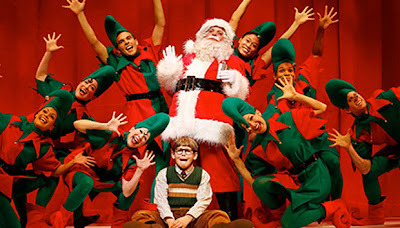 Some people, like my sister Joanne, revel in the holiday
season and in all the holiday-themed shows that come with it. Other people,
like me, bah humbug our way through both.
Which is why I always invite Joanne to go with me to any show that has
Christmas in its title or parts that call for cast members to dress like elves.
It’s also why this post may reflect more of my sister’s
sentiments than mine about A Christmas Story The Musical, currently playing at
the Lunt-Fontanne Theatre, and A Civil War Christmas, which just opened down at New
York Theatre Workshop.
Despite my chronic Grinchitis, I had been looking forward to
both shows. A Christmas Story marks the Broadway debut of the up-and-coming musical
team of Benj Pasek and Justin Paul, whose show Dogfight impressed me when it
played at Second Stage Theatre last summer (click here to read my review). Meanwhile, A Civil War Christmas is written by Paula
Vogel, whose Pulitzer Prize-winning How I Learned to Drive I’ve already
nominated for the Mount Rushmore of great American plays (click here to read my review of the recent revival of that).
The good news is that both are smartly produced, nicely performed and entertaining in a one-size-fits-all kind of way that makes them
perfect fare for the entire family, even those out-of-town Cousin Rogers whom
you hardly know anymore but who always seem to show up for the holidays.
The bah humbug news is that, as Christmas shows usually do, A Christmas Story and A Civil War Christmas wear the morals of their tales conspicuously on their lapels.
Both plots
are thin, unspooling in only loosely connected scenes. And there’s not much subtlety in either show.
Their goal is to provoke a smile or to tug at the heartstrings.
But none of that mattered to my sister who
thoroughly enjoyed both. And here's why:
A Christmas Story is based on the memoirist Jean Shepherd’s tale
about a Midwestern kid in the 1940s who desperately wants a BB gun for
Christmas. Shepherd’s story was made into a now-classic holiday movie, which,
it will come as no surprise, I’ve never seen.
But Joanne has and she says the musical (Joseph Robinette did the book)
is faithful to the movie—only better.
If that’s so, the credit has to be spread around. Pasek and Paul get points for putting together a sprightly
score that is faithful to the traditional Broadway sound and chocked full of
Christmas anthems (click here to read a piece about them). But the spot at the top of the list should go to director John
Rando and choreographer Warren Carlyle who have filled the show with one
terrific production number after another.
Some people, like my sister Joanne, revel in the holiday
season and in all the holiday-themed shows that come with it. Other people,
like me, bah humbug our way through both.
Which is why I always invite Joanne to go with me to any show that has
Christmas in its title or parts that call for cast members to dress like elves.
It’s also why this post may reflect more of my sister’s
sentiments than mine about A Christmas Story The Musical, currently playing at
the Lunt-Fontanne Theatre, and A Civil War Christmas, which just opened down at New
York Theatre Workshop.
Despite my chronic Grinchitis, I had been looking forward to
both shows. A Christmas Story marks the Broadway debut of the up-and-coming musical
team of Benj Pasek and Justin Paul, whose show Dogfight impressed me when it
played at Second Stage Theatre last summer (click here to read my review). Meanwhile, A Civil War Christmas is written by Paula
Vogel, whose Pulitzer Prize-winning How I Learned to Drive I’ve already
nominated for the Mount Rushmore of great American plays (click here to read my review of the recent revival of that).
The good news is that both are smartly produced, nicely performed and entertaining in a one-size-fits-all kind of way that makes them
perfect fare for the entire family, even those out-of-town Cousin Rogers whom
you hardly know anymore but who always seem to show up for the holidays.
The bah humbug news is that, as Christmas shows usually do, A Christmas Story and A Civil War Christmas wear the morals of their tales conspicuously on their lapels.
Both plots
are thin, unspooling in only loosely connected scenes. And there’s not much subtlety in either show.
Their goal is to provoke a smile or to tug at the heartstrings.
But none of that mattered to my sister who
thoroughly enjoyed both. And here's why:
A Christmas Story is based on the memoirist Jean Shepherd’s tale
about a Midwestern kid in the 1940s who desperately wants a BB gun for
Christmas. Shepherd’s story was made into a now-classic holiday movie, which,
it will come as no surprise, I’ve never seen.
But Joanne has and she says the musical (Joseph Robinette did the book)
is faithful to the movie—only better.
If that’s so, the credit has to be spread around. Pasek and Paul get points for putting together a sprightly
score that is faithful to the traditional Broadway sound and chocked full of
Christmas anthems (click here to read a piece about them). But the spot at the top of the list should go to director John
Rando and choreographer Warren Carlyle who have filled the show with one
terrific production number after another.
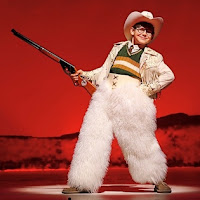 And the cast is equally deserving of praise. Two kids share the lead role of Ralphie, the boy who wants the BB gun. Joanne and I
saw Johnny Rabe, whose unaffected stage presence belies his young years. He didn't miss a beat when the chaps he wears in one fantasy sequence suffered a wardrobe malfunction that caused them to fall during our performance.
But all
the kids are great, particularly Jeremy Shinder, who plays Ralphie’s roly-poly
best friend, and Luke Spring, a little scene-stealer who does the best tap
number I’ve seen since the last time Savion Glover was onstage.
The adults
are fine too, especially John Bolton, who brings a loose-limbed goofiness to
Ralphie’s eccentric dad (click here to read a Q&A with him).
A Civil War Christmas is, as you might expect, a quieter
show. But it’s filled with music
too. Nearly half of its two and a half
hours is given over to the singing of Civil War ballads and Christmas carols.
Vogel says she wrote the play to honor her dying
brother's wish that the children in their family be taught more about American history.
She was further inspired by the horrors of Hurricane Katrina to write a play
that deals head-on with race. She spent two years researching this piece. (Click here to read an interview with her.)
And the cast is equally deserving of praise. Two kids share the lead role of Ralphie, the boy who wants the BB gun. Joanne and I
saw Johnny Rabe, whose unaffected stage presence belies his young years. He didn't miss a beat when the chaps he wears in one fantasy sequence suffered a wardrobe malfunction that caused them to fall during our performance.
But all
the kids are great, particularly Jeremy Shinder, who plays Ralphie’s roly-poly
best friend, and Luke Spring, a little scene-stealer who does the best tap
number I’ve seen since the last time Savion Glover was onstage.
The adults
are fine too, especially John Bolton, who brings a loose-limbed goofiness to
Ralphie’s eccentric dad (click here to read a Q&A with him).
A Civil War Christmas is, as you might expect, a quieter
show. But it’s filled with music
too. Nearly half of its two and a half
hours is given over to the singing of Civil War ballads and Christmas carols.
Vogel says she wrote the play to honor her dying
brother's wish that the children in their family be taught more about American history.
She was further inspired by the horrors of Hurricane Katrina to write a play
that deals head-on with race. She spent two years researching this piece. (Click here to read an interview with her.)
 The result is a series of scenes on Christmas Eve 1864 that makes
stops at the frontlines of battle where soldiers on both sides yearn to be with
loved ones, the homes of free blacks in the Georgetown section of Washington cautiously
hopeful about the approaching full end of slavery, the boarding house where John Wilkes
Booth is plotting to kill the president, a hospital where Walt Whitman is
tending patients and the White House, where the First Lady is eager to install
one of the newly-fashionable Christmas trees.
Tina Landau has directed this historical pageant in story theater fashion.
The actors narrate the story and take on multiple roles without paying
attention to age, gender, race or, in one case, the species of the character
they’re assuming.
Alas, the talent on display is also something of a mixed bag.
Among the goodies is little Sumaya Bouhbal, who seems to have recently lost her front baby teeth but more
than holds her own with the adults in the cast.
It was also hard to look away from Bob Stillman who might give Daniel
Day-Lewis a run for his money in an Abe Lincoln-look-alike contest. And Alice
Ripley brings the manic intensity she honed in her Tony-winning performance as
the bipolar mother in Next to Normal to the character of the similarly troubled
Mary Lincoln.
I found it all to be a bit sketchy but Joanne was enchanted
by A Civil War Christmas. She was further delighted to discover that Vogel was sitting just a few seats away from us. You might not get that big a treat if you go but seeing either of these shows will probably fill you with the holiday spirit, even if you're not big on that kind of thing.
The result is a series of scenes on Christmas Eve 1864 that makes
stops at the frontlines of battle where soldiers on both sides yearn to be with
loved ones, the homes of free blacks in the Georgetown section of Washington cautiously
hopeful about the approaching full end of slavery, the boarding house where John Wilkes
Booth is plotting to kill the president, a hospital where Walt Whitman is
tending patients and the White House, where the First Lady is eager to install
one of the newly-fashionable Christmas trees.
Tina Landau has directed this historical pageant in story theater fashion.
The actors narrate the story and take on multiple roles without paying
attention to age, gender, race or, in one case, the species of the character
they’re assuming.
Alas, the talent on display is also something of a mixed bag.
Among the goodies is little Sumaya Bouhbal, who seems to have recently lost her front baby teeth but more
than holds her own with the adults in the cast.
It was also hard to look away from Bob Stillman who might give Daniel
Day-Lewis a run for his money in an Abe Lincoln-look-alike contest. And Alice
Ripley brings the manic intensity she honed in her Tony-winning performance as
the bipolar mother in Next to Normal to the character of the similarly troubled
Mary Lincoln.
I found it all to be a bit sketchy but Joanne was enchanted
by A Civil War Christmas. She was further delighted to discover that Vogel was sitting just a few seats away from us. You might not get that big a treat if you go but seeing either of these shows will probably fill you with the holiday spirit, even if you're not big on that kind of thing.


To contact us Click
HERE
 As we've been promising all week, SHOWBUZZDAILY has set up fancy new digs in another part of the internet. If you're viewing this site via a preexisting bookmark, please type the url www.showbuzzdaily.com in your browser, and it'll take you to our new location...then re-bookmark us once you're there, of course.
We promise it'll be worth the journey--the site has a terrific new design and fresh content waiting for you at www.showbuzzdaily.com, so come join us!Related Posts: relocation,showbuzzdaily
To contact us Click
HERE
As we've been promising all week, SHOWBUZZDAILY has set up fancy new digs in another part of the internet. If you're viewing this site via a preexisting bookmark, please type the url www.showbuzzdaily.com in your browser, and it'll take you to our new location...then re-bookmark us once you're there, of course.
We promise it'll be worth the journey--the site has a terrific new design and fresh content waiting for you at www.showbuzzdaily.com, so come join us!Related Posts: relocation,showbuzzdaily
